Dell Technologies has announced a slew of new end-to-end AI services and hardware solutions, including new support for enterprise-scale data processing and new server racks equipped with the latest Nvidia chips.
Announced at Nvidia GTC 2026, the new features for Dell AI Factory with Nvidia include expanded support for data analytics, processing, and parallel file storage.
Since it was first announced in 2024, Dell has launched over 240 products, updates, and releases within Dell AI Factory with Nvidia and more than 4,000 Dell customers have started to use the offering.
This includes the Wellcome Sanger Institute, a world leader in genomics, which has used the offering to go from generating three genomes over the course of a decade to one genome every seven hours.
“The Dell AI Factory with Nvidia provides a unified, vertically integrated data foundation that brings analytics as well as AI together in a single stack,” said Varun Chhabra, SVP, Infrastructure Solutions Group at Dell Technologies.
Dell has announced a range of new offerings within the AI Data Platform with Nvidia, which underpins the wider Dell AI Factory with Nvidia offering, including a new Data Orchestration Engine.
This is a no-code and low-code engine, a result of Dell’s December 2025 acquisition of the end-to-end AI development platform Dataloop.
Chhabra explained that it helps to automate data workflows for customers and improve visibility for data engineers and data scientists, to reduce the amount of manual data tagging and data pipeline creation that workers need to do.
Dell is also bringing new AI support across the Data Analytics Engine, which makes SQL data accessible via natural language processing (NLP), as well as support for Nvidia’s CUDA-X libraries within Data Search Engine and Data Processing Engine.
All told, Dell said the improvements unlock 12 times faster vector indexing and three times faster data processing. In internal tests with Qwen3-32B, the new features also enabled 19 times faster time to token.
Dell touts new storage offerings for the largest enterprises
Another major addition to Dell AI Factory with Nvidia is the Dell Lightning File System, a new tier 0, ultra-high performance storage offering intended for maximal GPU utilization and the lowest possible latency.
Dell Lightning File System delivers data transfer speeds of up to 150GB/sec per rack unit and is intended to complement Dell PowerScale and Dell ObjectScale for the most intense customer demands.
“The Lightning File System is really aimed at the largest of the large AI workloads, whether it's neoclouds, GPU as a service providers, or extremely high performance needs such as high frequency trading,” said Chhabra.
Dell said the Lightning File System offers twice the throughput of competing parallel file systems and 20 times greater performance than competitors using flash-only scale-out file systems.
Customers looking to launch large-scale AI storage clusters will also benefit from Dell Exascale Storage, a new software-defined, three-in-one architecture for deployments exceeding 10PB.
It brings together Dell PowerScale, Dell ObjectScale, and Dell Lightning File System, with up to 800 Gbit Ethernet network connectivity and 6TB/sec performance per rack performance.
“The goal here is this is not a new storage product, but a storage delivery vehicle, if you will, that customers can use to adapt different storage personalities over time without having to re-platform,” Chhabra explained.
“So if certain AI or HPC workloads are best suited for file data, they can deploy PowerScale on the Exascale Storage. If they are looking at modern applications or modern AI applications that require large-scale object storage deployment, they can deploy ObjectScale on the same cluster.
PowerEdge for frontier models
In addition to its Dell AI Factory with Nvidia announcements, Dell has used Nvidia GTC to unveil a slew of new hardware advancements.
First, Dell announced PowerEdge XE9812, a rack-scale system for the Dell Integrated Rack 9000 (IR9000) that comes packaged with the Nvidia Rubin NVL72.
Dell said the PowerEdge XE9812 can achieve 10 times lower cost-per-token compared to Nvidia Blackwell chips and needs four times fewer GPUs to inference a mixture of experts (MoE) model.
New NVLink capabilities within the rack allow it to achieve GPU to GPU bandwidth of up to 260TB/sec.
“The single rack has more bandwidth than the entire internet, which is kind of incredible,” Chhabra said.
The server is fanless, as it’s fully liquid-cooled, and quick disconnects for hot swaps and maintenance that doesn’t disrupt operations.
In addition to its latest frontier offering, Dell also announced new 100% liquid-cooled server offerings in the form of the PowerEdge XE9880L, XE9885L, and XE9882L.
“All of them have HGX Rubin GPUs and the difference between the systems is really the CPU choices,” Chhabra explained.
The XE9880L comes with dual-socket Intel Xeon CPUs, the XE9885L comes with next-generation AMD Venice CPUs, and the XE9882L comes with Rubin Arm-based CPUs.
These servers support up to 144 GPUs per rack, which are liquid cooled for higher performance per kilowatt. The servers house Nvidia HGX Rubin NVL8, which pack 8 Rubin GPUs in a 2U chassis interlinked with NVLink v6 connectivity and complemented with BlueField data processing units (DPUs) and Spectrum-X Ethernet switches.
Overall, Dell recorded a 5.5x performance improvement with this server family compared to B200 GPUs.
Dell also announced the Dell PowerEdge R9822 and M9822, which bring Nvidia’s Vera CPU to rack-scale environments.
“These two servers extend the power edge portfolio with support for the Vera processors, as I mentioned, which enable organizations to deploy modern ARM based compute on trusted power edge infrastructure,” said Chhabra.
He added that the servers are intended to support AI factories, high-bandwidth data analytics, databases, cloud-native applications, and high-performance computing (HPC) workloads.
Finally, Dell is launching the PowerEdge R770, R7725, and R7715, which feature Nvidia RTX Pro 4500 Blackwell GPUs for three times faster data processing than L4 tensor core GPUs, four times faster visual compute and content creation than the previous generation.
PC announcements for edge AI
addition to Nvidia’s Grace Blackwell Ultra GB300 Superchip, the workstation comes with 496GB LPDDR5X CPU memory and 252GB HBM3e GPU memory.
It is capable of 20 petaflops of FP4 computing power, enough to run trillion-parameter models entirely at the edge.
Jon Siegal, SVP of Product Marketing at Dell Technologies, said the Dell Pro Max with GB300 is “purpose-built” to meet next-generation agentic AI workloads.
Dell is also bringing back the Dell Pro Precision workstation range, with a range of offerings designed to run trillion-parameter models locally for specialized industries such as healthcare, deep tech, and financial services.
In response to a question from ITPro, a Dell representative also indicated that the firm is seeing some customers fine tuning trillion-parameter models into billion-parameter small language models (SLMs).
Dell’s mobile workstations are now thinner, lighter, and more powerful. The Dell Pro Precision 5 series, available the latest Intel Core Ultra H processors and Nvidia RTX Pro discreet graphic options, delivering a blend of powerful graphics performance and up to 50 TOPS of AI processing capability.
The Dell Pro Precision 7 series is aimed at designers and creators, with RTX Pro 3000 discrete graphics in addition to the Intel chips.
FOLLOW US ON SOCIAL MEDIA
Follow ITPro on Google News and add us as a preferred source to keep tabs on all our latest news, analysis, views, and reviews.
You can also follow ITPro on LinkedIn, X, Facebook, and BlueSky.


 5 reasons every AI team needs a deskside agentic AI accelerator like the Dell Pro Max with GB10
 10 reasons to choose the Dell Pro 5 for your business

 ‘Now, compute is revenue’: Jensen Huang hails ‘golden age’ of AI in wake of seismic revenue gains
 Modernizing infrastructure? Don't overlook server security
 4 key considerations for data center modernization on a budget
 7 capabilities every modern enterprise storage platform should deliver in 2026
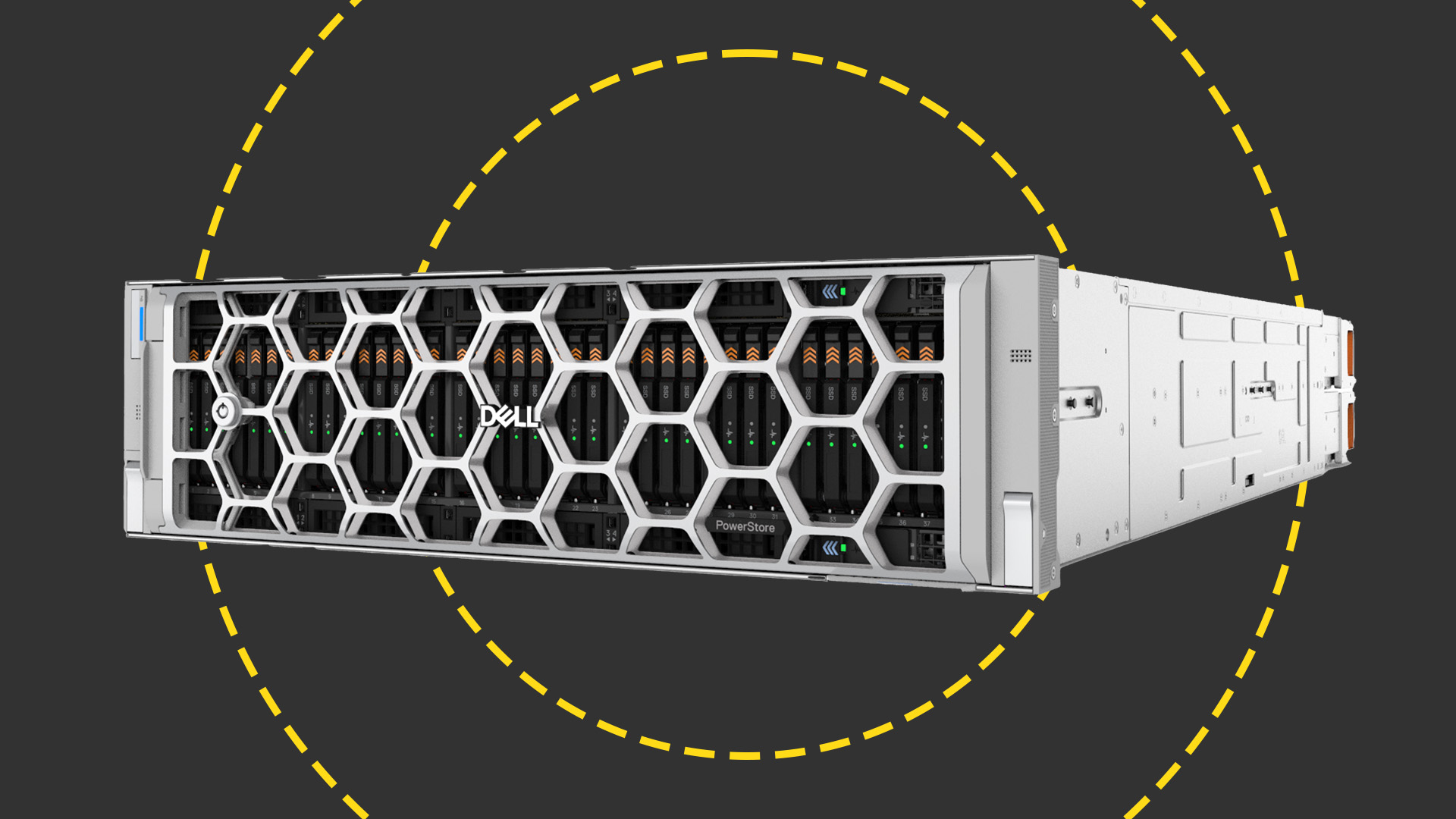 Dell PowerStore Elite unveiled at Dell Technologies World 2026
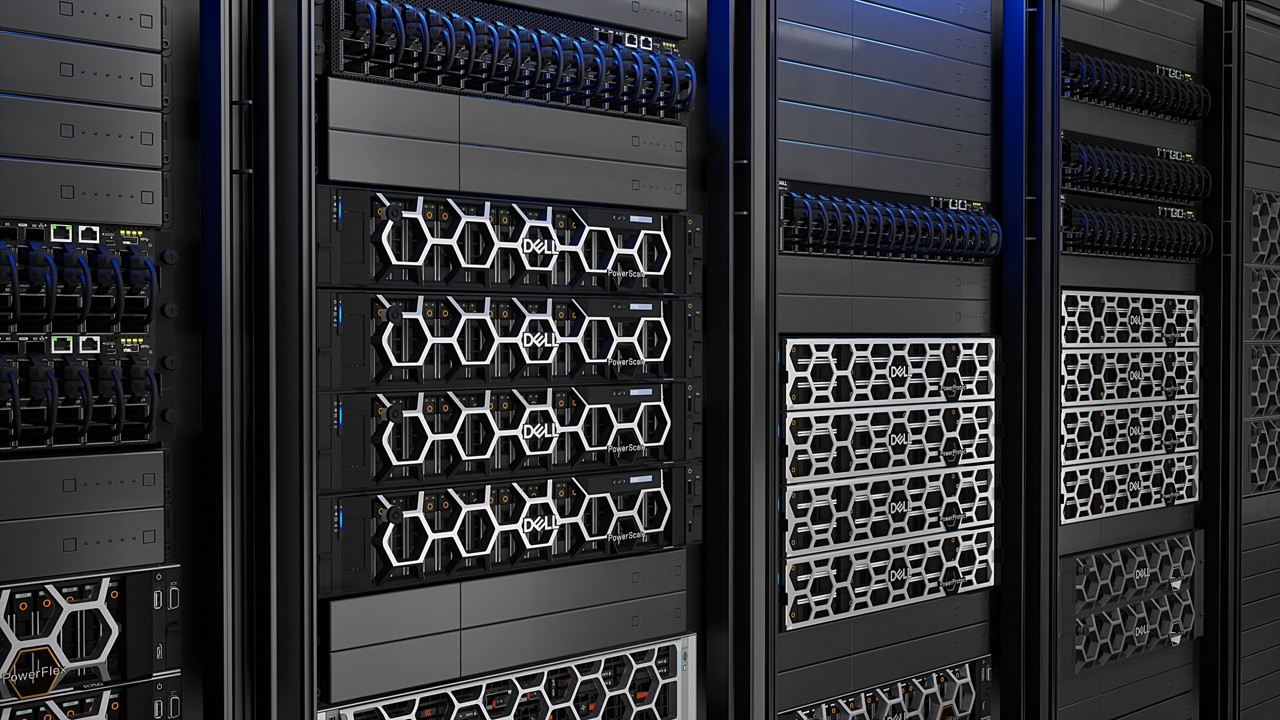 Why Dell PowerScale’s intelligent data placement is critical for AI-era performance and efficiency
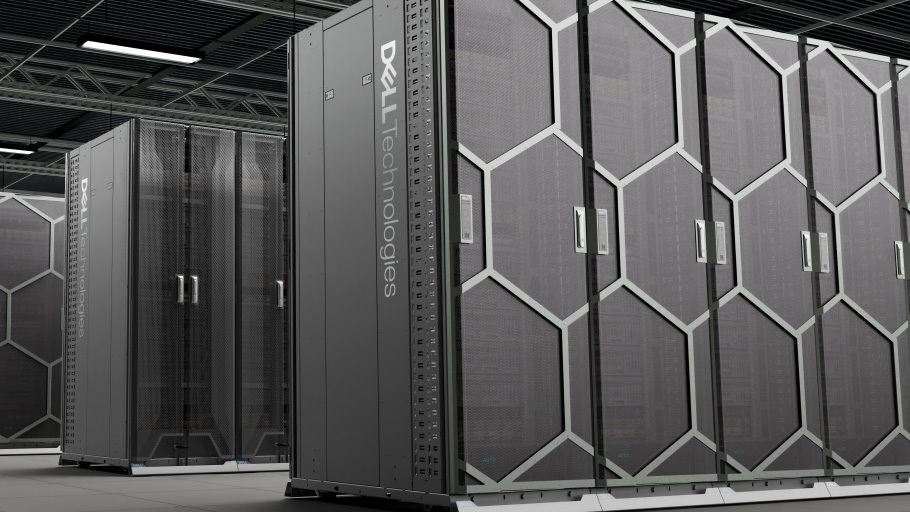 Dell PowerRack launches at Dell Technologies World 2026 as a ‘turnkey’ networking, storage, and compute system for AI
 Why speed and performance are vital for extracting value from data


