Sign up today and you will receive a free copy of our Future Focus 2026 report - the leading resource for IT decision-maker insight on priorities and investment areas in AI, security and more.
You are now subscribed
Your newsletter sign-up was successful
An account already exists for this email address, please log in.
‘Now, compute is revenue’: Jensen Huang hails ‘golden age’ of AI in wake of seismic revenue gains
Data center revenue gains surged 117% year-over-year at Nvidia, but supply chain issues are still a lingering concern
Nvidia CEO Jensen Huang claims the AI industry is in the midst of a “golden age” after the company recorded huge revenue gains in its recent quarterly earnings report.
Revenue surged to $96.2 billion in the second quarter, marking a 106% increase compared to this time last year. The chipmaker said it expects revenue to surge to $108 billion by the end of the third quarter.
In a statement, Huang said the revenue gains reflect the growing impact of AI worldwide, with the technology having now reached an “inflection point”.
“It’s doing useful work. Its tokens are productive and profitable. Now, compute is revenue,” he said.
“And demand is accelerating. This time last year, one lab alone was driving the buildout; today, we have a golden age of new AI labs and startups, multiple frontier labs scaling in parallel, a thriving open model ecosystem and physical AI coming online — with strong momentum across the US and around the world.”
Huang noted that AI infrastructure build-outs have played a key role in recent revenue gains – an area in which the company also recorded significant growth.
Data center revenue across the second quarter increased to $89 billion, up 18% from the previous quarter and marking a 117% surge year-over-year. Notably, this earnings report marks the first since the Nvidia Vera Rubin rackscale platform announcement in May, which the company said is now “ramping into full production”.
Get the ITPro daily newsletter
Sign up today and you will receive a free copy of our Future Focus 2026 report - the leading resource for IT decision-maker insight on priorities and investment areas in AI, security and more.
Vera Rubin racks are now up and running at a host of major industry players, including Google Cloud, Microsoft, Oracle, CoreWeave, and Nebius.
Nvidia supply issues still a cause for concern
Forrester principal analyst Naveen Chhabra echoed Huang’s comments regarding AI infrastructure build-outs. However, for enterprise technology buyers, a combination of industry trends could dampen excitement - particularly supply constraints.
“The most important message is that AI infrastructure demand is still accelerating, but supply constraints, ecosystem lock-in, and ROI pressure are becoming the dominant strategic issues,” he said.
Chhabra said the Nvidia results suggest that the AI infrastructure market is “entering a new phase where enterprises must focus less on acquiring GPUs and more on extracting measurable business value from AI investments”.
Huang acknowledged that supply constraints are a lingering concern. The company expects revenue growth of 70% for its 2028 year, and while Huang said demand is “much greater” than that, it’s limited on the volume of products it can roll out.
Chhabra said supply issues show that multi-cloud and hybrid sourcing strategies have become “increasingly important to avoid dependence on a single provider” – especially for larger enterprises.
“Large AI training clusters and high-end inference deployments may continue to face availability constraints,” he said.
Heightened competition
While Nvidia has been center stage since the get-go in the generative AI race three years ago, enterprises are shifting their focus to alternatives in a bid to diversify infrastructure hardware.
A host of major industry players are also developing their own chips, in part to reduce reliance. In an earnings call, Huang brushed off concerns on this front, adding that he has “100% confidence that our technology will continue to be extraordinary for them”.
Alongside the earnings results, Nvidia revealed AWS plans to acquire another two million GPUs to bolster data center capacity. The announcement comes less than six months after the hyperscaler unveiled plans to deploy one million GPUs across data centers.
Chhabra noted that while enterprises are tweaking strategies, Nvidia’s broader ecosystem still holds significant weight and is a key differentiator for the chipmaker.
“Accelerators options are emerging. However, Nvidia's advantage is not simply silicon but the entire platform, software stack, and ecosystem,” he said.
“Nvidia supports "every model" and every deployment environment. The market is unlikely to become "Nvidia vs. one competitor." Instead, buyers will operate in a heterogeneous environment with Nvidia, hyperscaler chips, and specialized accelerators."
Ross Kelly is ITPro's News & Analysis Editor, responsible for leading the brand's news output and in-depth reporting on the latest stories from across the business technology landscape. Ross was previously a Staff Writer, during which time he developed a keen interest in cyber security, business leadership, and emerging technologies.
He graduated from Edinburgh Napier University in 2016 with a BA (Hons) in Journalism, and joined ITPro in 2022 after four years working in technology conference research.
For news pitches, you can contact Ross at ross.kelly@futurenet.com, or on Twitter and LinkedIn.


 Salesforce teams up with Nvidia to launch Koa, a dedicated CRM reasoning model
 ‘These Chinese models are excellent’: Nvidia CEO Jensen Huang hails powerful new Chinese AI models like Kimi K3 – and says don’t be put off by security ‘misconceptions’
 HPE AI Factory adds features to improve your experience with agents
 Nvidia touts its contribution to UK sovereign AI plans
 ‘This is the new PC. The personal AI computer’: Nvidia wants its RTX Spark ‘superchip’ to fuel the AI PC boom
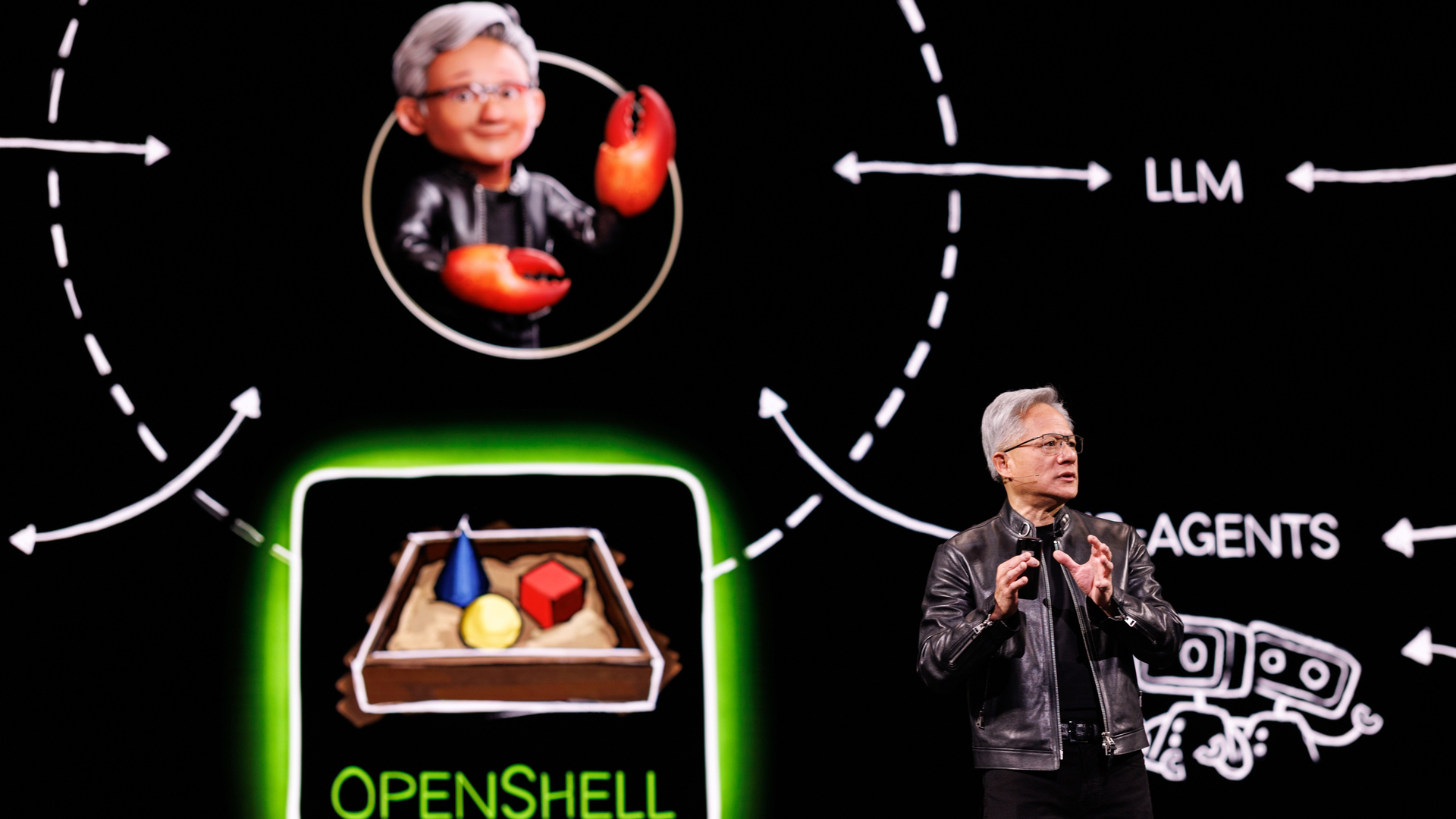 Nvidia targets open source interoperability with new model coalitions, agentic frameworks
 Dell Technologies unveils massive expansion to Dell AI Factory with Nvidia at GTC 2026
 Will AI hiring entrench gender bias?


