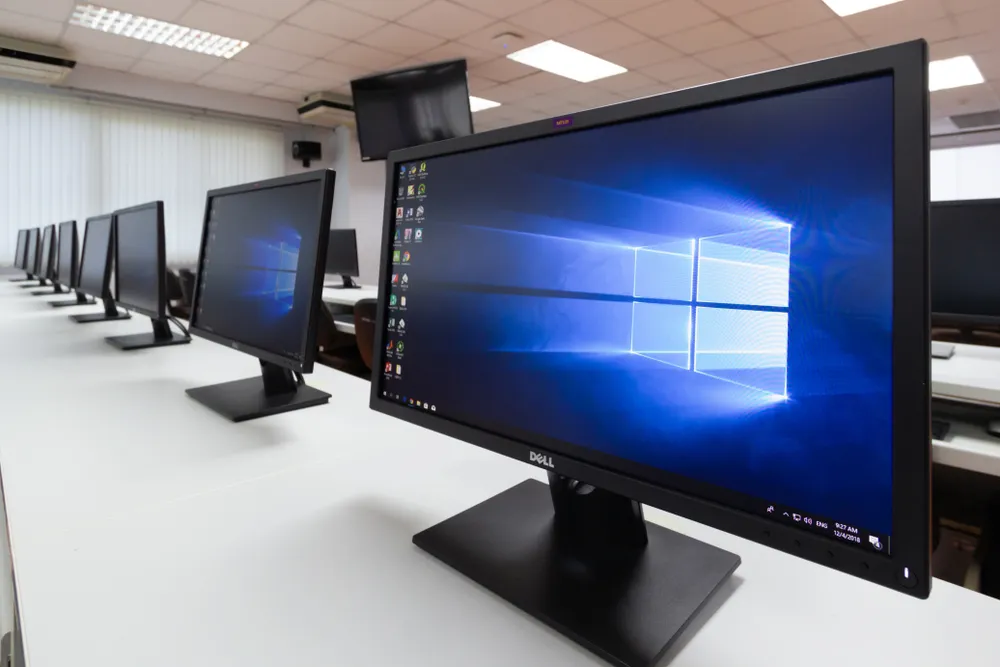
Microsoft extends support for Windows 10 version 1803
Enterprise users will now continue to receive security updates until May 2021
Microsoft has announced that it's extending support for enterprise editions of Windows 10 for an additional six months as a result of the coronavirus pandemic.
The delay has been scheduled for the Enterprise, Education, and IoT Enterprise editions of the operating system, Microsoft said, all of which were due to reach 'end of service' in November this year.
Microsoft announced that, as a result of businesses deferring updates as a result of mass remote working, the final security update for Windows 10 version 1803 will be now be released on 11 May 2021.
Security updates for the OS will be available through Windows Update, Windows Server Update Services, and the Microsoft Update Catalog. Microsoft says that businesses do not need to change their current update management workflows to receive the updates.
Principal program manager of communications at Microsoft, Chris Morrissey, said: "We have heard your feedback and understand your need to focus on business continuity in the midst of the global pandemic.
"As a result, we have decided to delay the scheduled end-of-service date for the Enterprise, Education, and IoT Enterprise editions of Windows 10, version 1803."
While the Enterprise, Education and IoT Enterprise editions of Windows 10 version 1803 will be getting an extension to their end of service date, the Home and Pro editions of this version of the operating system reached their end of service date back in November 2019.
Sign up today and you will receive a free copy of our Future Focus 2026 report - the leading resource for IT decision-maker insight on priorities and investment areas in AI, security and more.
Next year looks set to be a busy one for IT administrations, as a number of other major Microsoft products will also reach their end of support in 2021. This includes multiple versions of Windows 10, including 1809 (Enterprise, Education, IoT Enterprise) and 1909 (Home, Pro, Pro Education, Pro for Workstations).
Carly Page is a freelance technology journalist, editor and copywriter specialising in cyber security, B2B, and consumer technology. She has more than a decade of experience in the industry and has written for a range of publications including Forbes, IT Pro, the Metro, TechRadar, TechCrunch, TES, and WIRED, as well as offering copywriting and consultancy services.
Prior to entering the weird and wonderful world of freelance journalism, Carly served as editor of tech tabloid The INQUIRER from 2012 and 2019. She is also a graduate of the University of Lincoln, where she earned a degree in journalism.
You can check out Carly's ramblings (and her dog) on Twitter, or email her at hello@carlypagewrites.co.uk.
-
Everything you need to know about Euro-Office, Europe's open source alternative to Microsoft 365 and Google Workspace – including features, launch dates, and how to access itNews Euro-Office offers a sovereign European rival to Microsoft Office and Google Docs
-

‘The worst thing an employee could do’: Workers are covering up cyber attacks for fear of reprisal – here’s why that’s a huge problemNews More than one-third of office workers say they wouldn’t tell their cybersecurity team if they thought they had been the victim of a cyber attack.
-

Maximizing Microsoft 365 Security: How Cloudflare enhances protection and adds valueWebinar Strengthen your defenses, proactively block attacks, and reduce risks
-

VPN replacement phases: Learn others’ real-world approachesWebinar Accelerate Zero Trust adoption
-

"Thinly spread": Questions raised over UK government’s latest cyber funding schemeThe funding will go towards bolstering cyber skills, though some industry experts have questioned the size of the price tag
-

Strategies for improving security team efficiencyWebinar Improved security efficiency and from a Cloudflare investment
-
Modern enterprise cybersecuritywhitepaper Cultivating resilience with reduced detection and response times
-
Modern enterprise cybersecuritywhitepaper Cultivating resilience with reduced detection and response times