Nvidia and Microsoft team up to build 'most powerful' AI supercomputer
The firms seek to accelerate the training of AI models using Azure's supercomputer infrastructure and Nvidia GPUs


Nvidia has announced that it will collaborate with Microsoft on a years-long project to create an AI supercomputer, that could rank amongst the world’s most powerful, in order to help organisations train and deploy AI at scale.
The deal will see Nvidia contribute tens of thousands of GPUs, networking technology, and its full stack of AI software to Microsoft Azure cloud’s supercomputing infrastructure, which already utilises ND and NC-series virtual machines trained to work on artificial intelligence (AI) and deep learning.
Nvidia will use Azure’s virtual machine (VM) instances to train generative AI, a field which includes language models such as OpenAI’s GPT-4, and Nvidia’s own Megatron Turing NLG.
The company’s full AI stack, containing workflows and development kits certified for use on Azure, will be made available to Azure enterprise customers.
The collaboration will also see improvements to DeepSpeed, Microsoft’s deep learning optimisation software suite used to accelerate training models. Going forward, DeepSpeed will utilise Nvidia’s H100 Transformer Engine architecture to accelerate large models, including generative AI, at up to twice the speed previously possible.
“AI is fueling the next wave of automation across enterprises and industrial computing, enabling organisations to do more with less as they navigate economic uncertainties,” said Scott Guthrie, executive vice president of the Cloud + AI Group at Microsoft.
“Our collaboration with Nvidia unlocks the world’s most scalable supercomputer platform, which delivers state-of-the-art AI capabilities for every enterprise on Microsoft Azure.”
The Total Economic Impact™ of IBM Spectrum Virtualize
Cost savings and business benefits enabled by storage built with IBMSpectrum Virtualize
Azure VM instances currently contain Nvidia A100s, which utilise Quantum 200Gbit/sec Infiniband networking. The addition of the H100s will see this networking speed double through the use of Quantum-2 400Gbit/sec Infiniband networking, capable of handling larger AI training sets and workloads.
Natural language processing (NLP) models like GPT-3 and its upcoming successor GPT-4 have been associated with controversial deployment in the past. At one point, models such as these were thought to be too dangerous for general release, due to their ability to convincingly craft fake news pieces and propensity for spouting hate speech.
Researchers have expressed hope that through intensive training in supercomputers, NLPs could prove invaluable for business use in text and speech comprehension, the future of virtual assistants, and through the partial or full automation of tasks such as computer programming.
This is not the first supercomputer Nvidia has worked on, nor the first AI supercomputer. In 2021, the chip giant switched on the UK’s fastest supercomputer, aimed at using AI for intensive health research, and in January 2022 it was announced that Meta would build the “world’s fastest” AI supercomputer in collaboration with Nvidia.
More recently still, Hewlett Packard Enterprise (HPE) lifted the lid on ‘Champollion’, an AI supercomputer that it plans to make available to scientists and engineers that was designed in collaboration with Nvidia.
Nvidia has invested in a wide range of AI and supercomputing projects, with the company’s own ‘Selene’ supercomputer having consistently ranked in the top ten most powerful computers in the world since its 2020 creation.
Nvidia declined to give further details on the timeline of its agreement with Microsoft.
“We are not elaborating on the terms of the deal beyond saying that it is a multi-year agreement,” said Paresh Kharya, senior director of product management at Nvidia told IT Pro.
"The goal is to accelerate the most important AI applications. Working with Microsoft Azure, we gain speed and the ability to do things at scale using less energy. We can then take AI applications such as speech recognition and large language models to advance generative AI."


-
 HPE eyes infrastructure flexibility gains with new Private Cloud AI announcements at GTC Berlin
News New GPU flexibility features will support a “broader mix of AI workloads” for HPE Private Cloud AI users
-
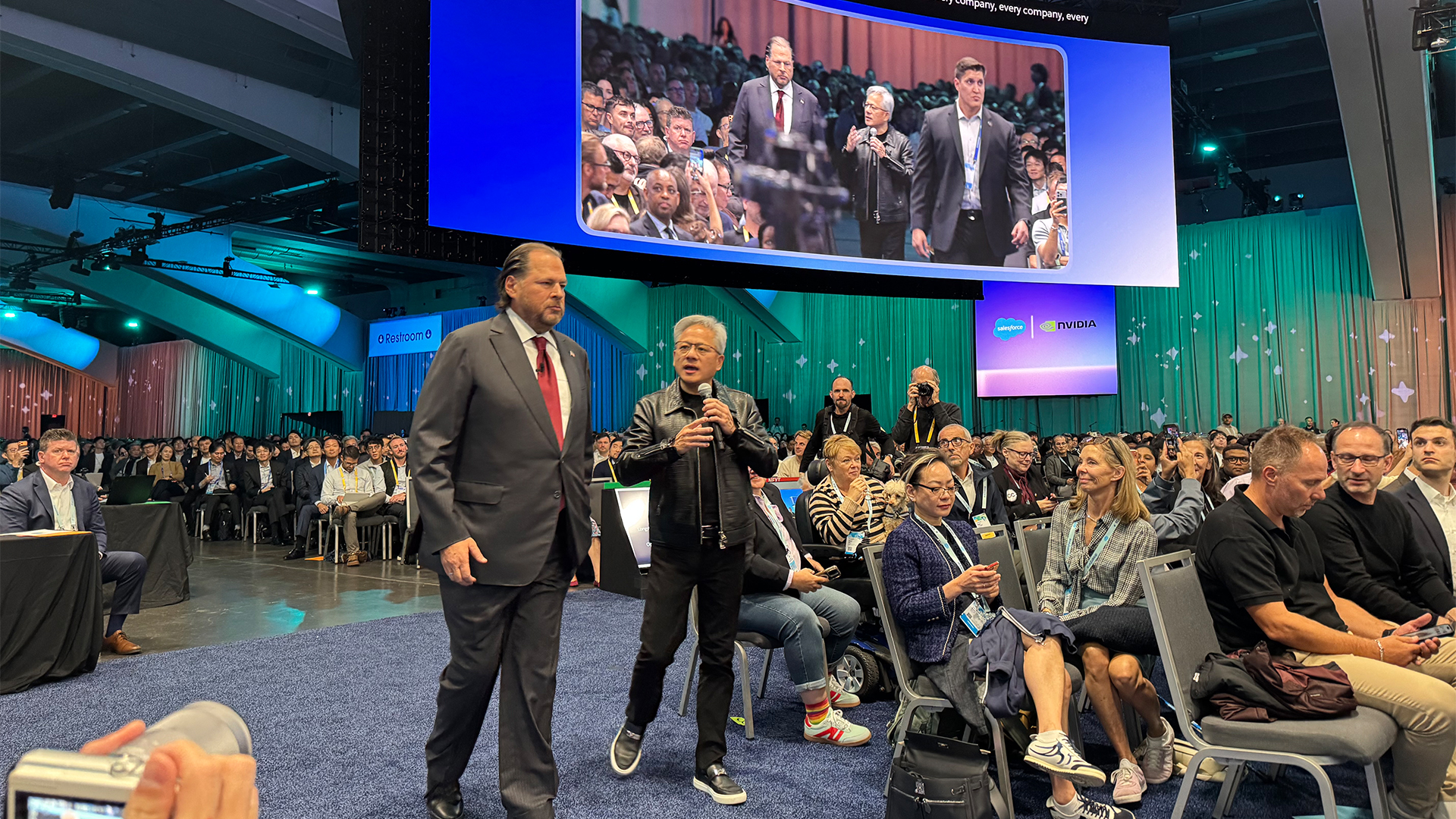 ‘It’s going to make software so much better’: Marc Benioff and Jensen Huang aren’t sold on the ‘SaaSpocalypse’ – AI will take the industry to the next level
News Reports on the death of SaaS has been greatly exaggerated, according to the Nvidia and Salesforce chiefs – but big changes are still looming for software providers
-
 Salesforce teams up with Nvidia to launch Koa, a dedicated CRM reasoning model
News The Koa reasoning model is a "game changer" for sales personnel and agents, according to Salesforce
-
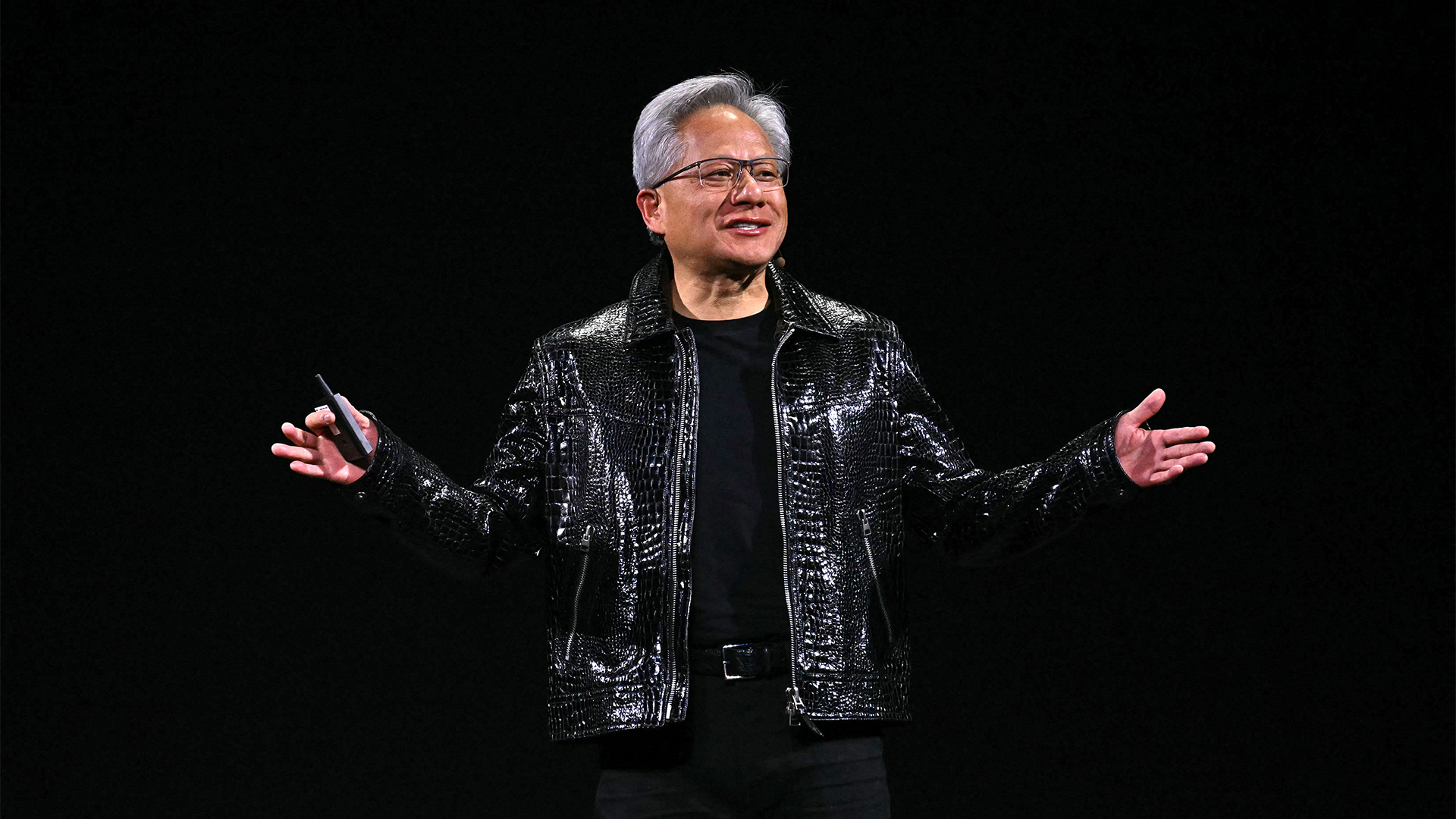 Nvidia’s Hugging Face acquisition could pose a big threat to hyperscalers
News Nvidia already holds great sway in the AI infrastructure space, this could help “shape where AI workloads are built and deployed”
-
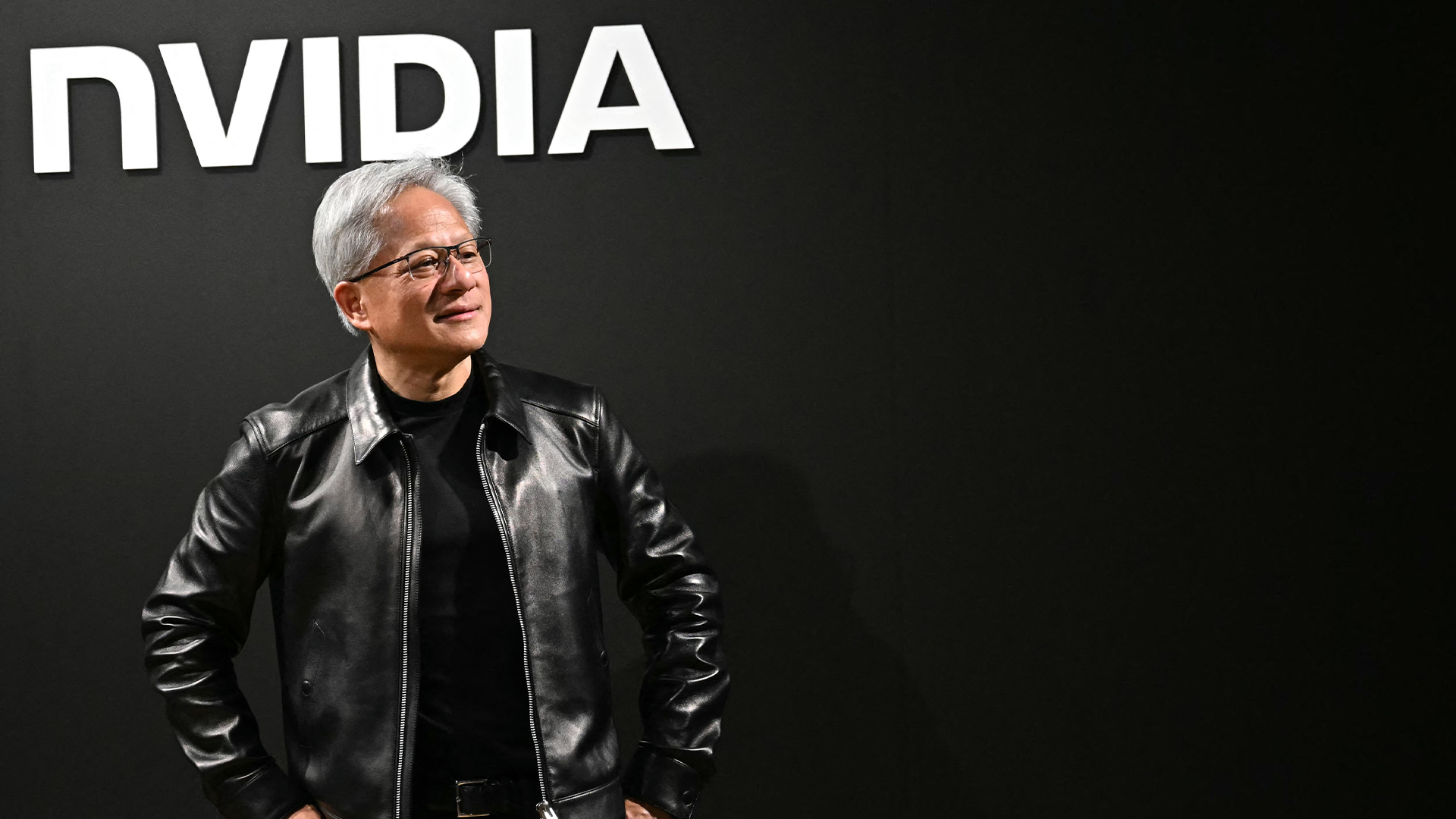 ‘Now, compute is revenue’: Jensen Huang hails ‘golden age’ of AI in wake of seismic revenue gains
News Data center revenue gains surged 117% year-over-year at Nvidia, but supply chain issues are still a lingering concern
-
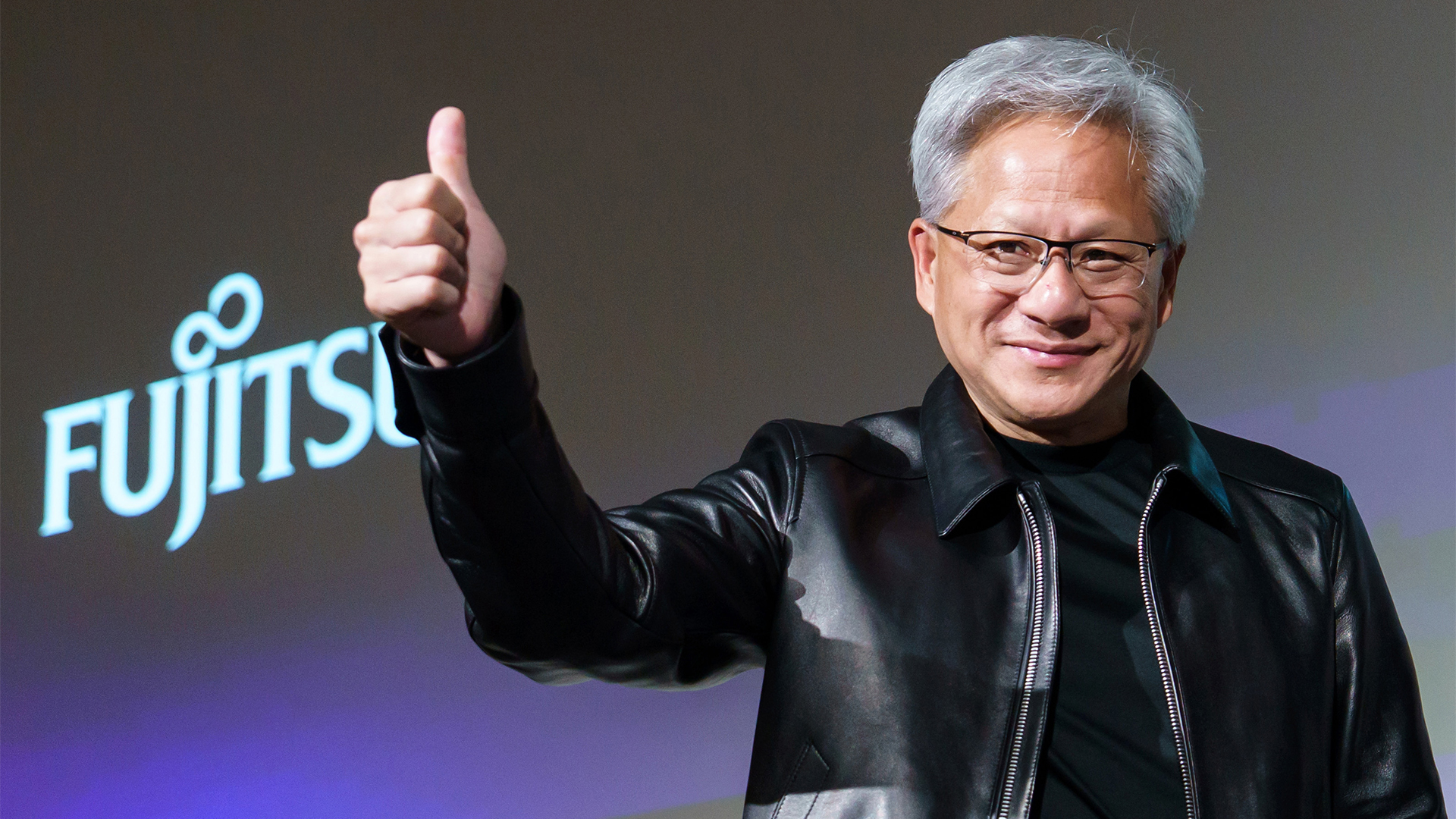 ‘These Chinese models are excellent’: Nvidia CEO Jensen Huang hails powerful new Chinese AI models like Kimi K3 – and says don’t be put off by security ‘misconceptions’
News As powerful new AI models like Kimi K3 hit the market, Huang says competition will be a positive for the global industry
-
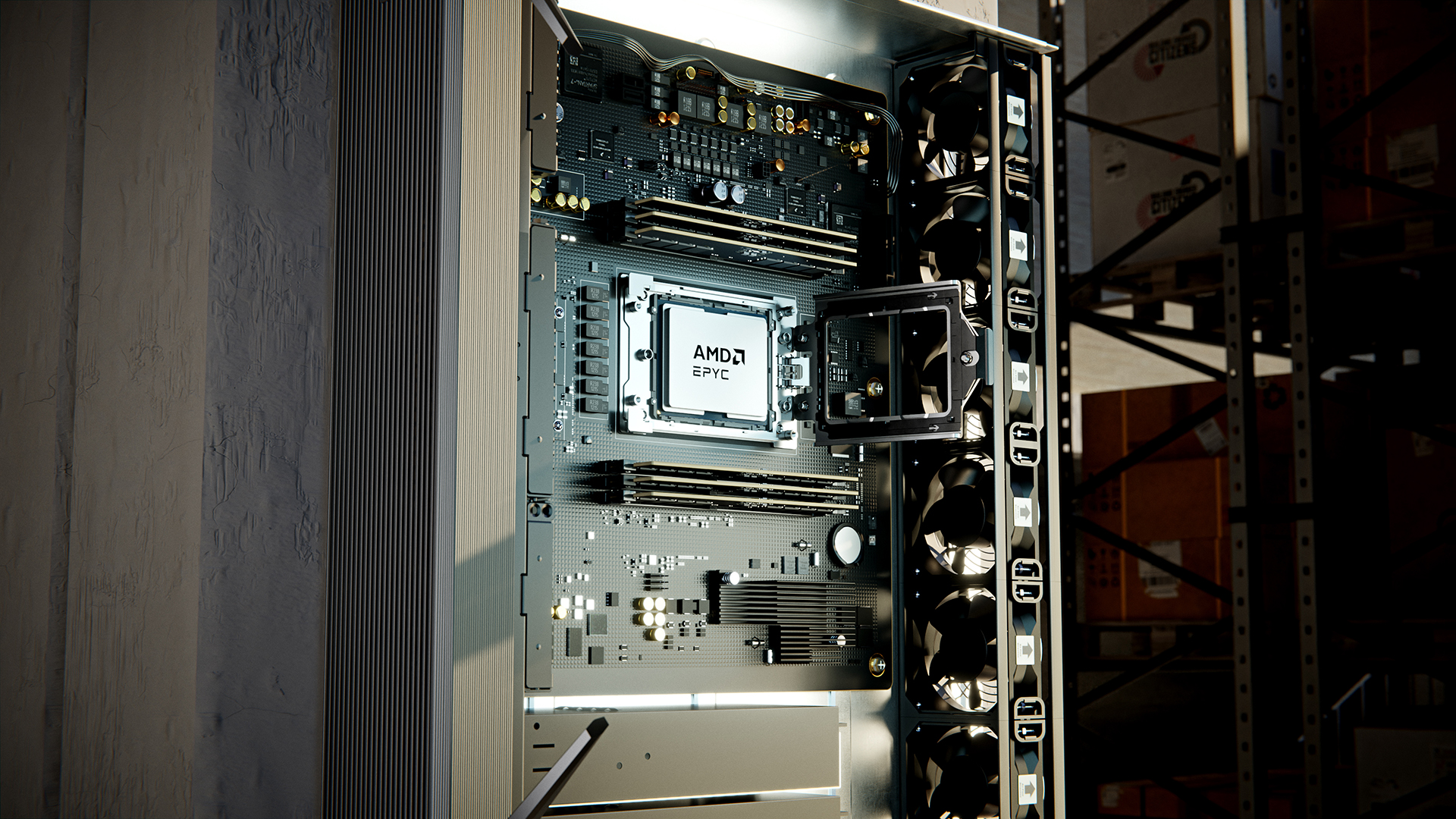 How AMD EPYC CPUs and AMD Instinct GPUs are powering the world's HPC facilities
Sponsored AMD offers powerful chipsets for AI and traditional HPC workloads, including native FP64 support
-
 HPE AI Factory adds features to improve your experience with agents
News The HPE AI Factory will now offer the Nvidia Agent Toolkit software, such as Nvidia Nemotron open models and Nvidia NemoClaw


