Google Brain founder Andrew Ng believes everyone should dab their hand at “vibe coding” as a way of beefing up their programming skills, but some industry experts aren’t quite so keen on the idea.
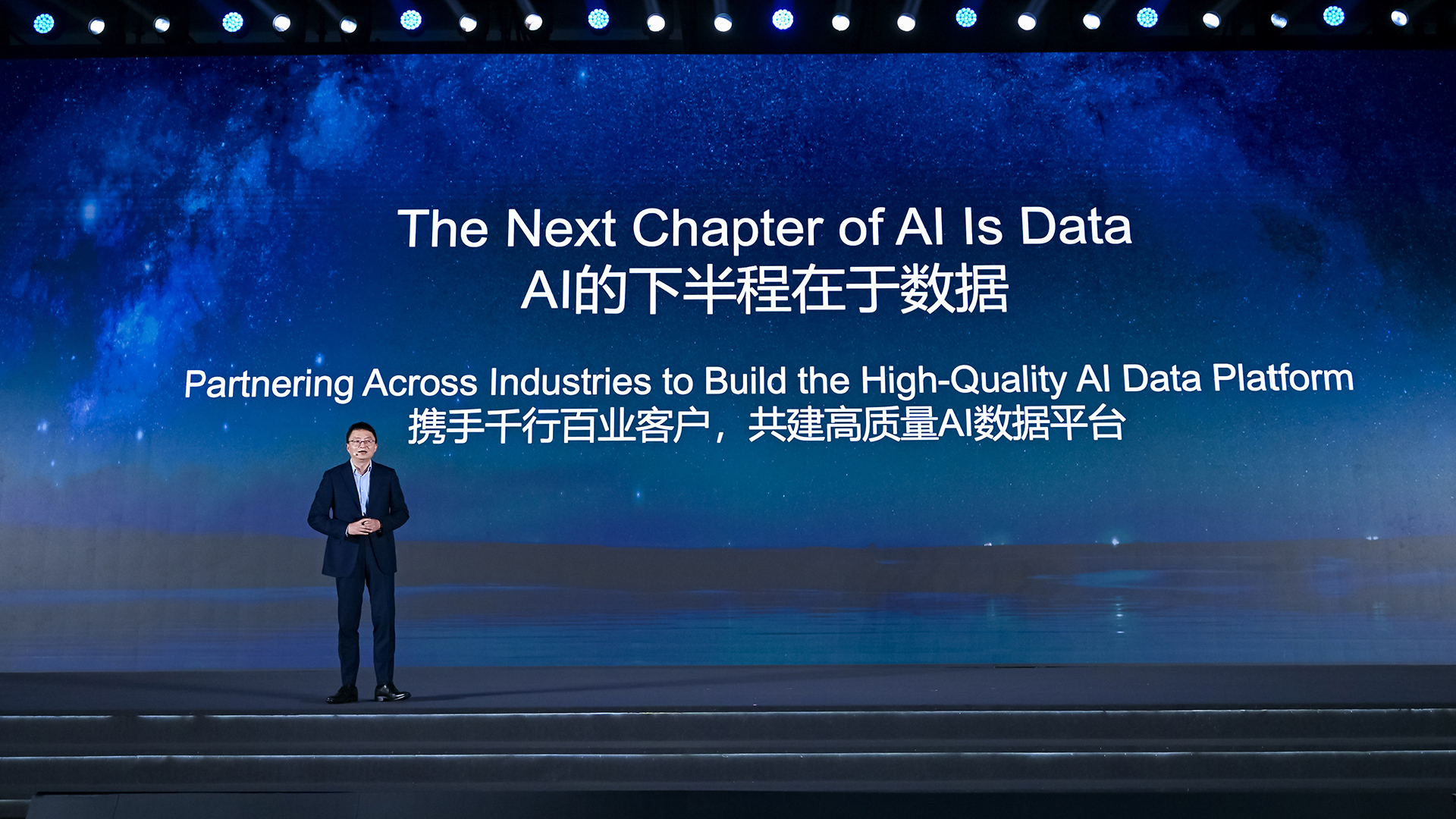
Speaking at Snowflake’s annual ‘Build’ conference, Ng suggested those looking to build applications shouldn’t do it manually and instead turn to AI tools to speed up the process.
"Don't code by hand. Don't do the old way," he told attendees, per reports from Business Insider. "Get AI to help you to code.”
“That will make people in all job functions much more productive and have more fun."
Vibe coding is the word of the year, literally. In October, Collins Dictionary granted it the annual award following its explosive rise to prominence over the last nine months.
The practice, which involves using natural language prompts to generate code and speed up development processes, has been hailed as a great breakthrough in software development and has gained significant traction across the tech industry.
Indeed, it’s become a burgeoning industry. Some of the most-watched startups globally – such as Cursor, Replit, and Lovable – specialize in ‘vibe coding’ while big AI providers like Anthropic and OpenAI have also jumped on the bandwagon.
Proponents of the practice, like Ng, argue vibe coding helps take the drudge work out of software development and lowers the barrier to entry for non-technical individuals.
“The bar to coding is now lower than it ever has been,” Ng told attendees. “People that code, be it CEOs and marketers, recruiters, not just software engineers, will really get more done than ones that don’t.”
Nigel Douglas, head of developer relations at Cloudsmith, agreed that this aspect of vibe coding has marked benefits. It's democratizing what was once an exclusive domain of expertise.
"AI-assisted vibe coding can be incredibly helpful for beginners as it takes away a lot of the initial intimidation,” he told ITPro. “
"Users can experiment and ask questions in natural language and immediately see how the code behaves,” Douglas added. “This kind of low-friction environment often helps people grasp core concepts faster because they can learn through doing rather than memorizing syntax or other programming languages.”
Looking at it from this perspective, proponents of the trend aren’t wrong. Since OpenAI co-founder Andrej Karpathy coined the term in February this year, countless applications worldwide have been built using AI tools, often by those with no prior experience in development.
Is vibe coding risky?
But is the trend all it’s cracked up to be? Some critics suggest that relying on AI tools to build software comes with significant risks, both in terms of security and the long-term impact on developers themselves.
Others, meanwhile, say using the technology in software development often isn't worth the hassle.
Analysis from Fastly earlier this year, for example, found that while developers are using AI tools to speed up production, the gains delivered by the technology are offset by the fact they spend a big chunk of their time fixing flawed or faulty code.
More than two-thirds (67%) of developers reported spending more time debugging AI-generated code compared to before they started using these tools.
Moreover, relying too heavily on AI tools and essentially giving the technology the keys to the kingdom can have dire consequences. As ITPro reported in August, an incident involving one of the aforementioned vibe coding darlings, Replit, proved disastrous for one startup founder.
While disaster was ultimately averted on this occasion, experts told ITPro at the time the incident highlighted the risks associated with AI coding tools.
Don’t overlook the fundamentals
Security-related issues surrounding vibe coding mean this isn’t a recommended practice in the enterprise, industry experts told ITPro. Tal Zarfati, lead architect at JFrog, agreed with Ng and Douglas on the accessibility front.
However, he warned it “introduces new layers of risk if not approached carefully”.
“While enhancing developer productivity, [vibe coding] significantly amplifies software supply chain risks, especially when third-party models are used without scrutiny,” he said.
Zarfati added that developers relying too heavily on AI could leave their organization exposed to an array of AI-related threats or vulnerabilities such as slopsquatting, where attackers “exploit naming gaps in AI-generated code suggestions”.
“The risks go deeper as model-based training attacks, prompt injections, and guardrail bypasses in generative AI tools introduce vulnerabilities that traditional security practices often overlook,” he continued. “These issues are amplified when vibe-coded apps are embedded into a secure software supply chain.”
Chrissa Constantine, a senior cybersecurity solutions architect at Black Duck, told ITPro that users diving headlong into vibe coding also risk skipping vital learning curves.
“Accessibility doesn’t erase fundamentals,” Constantine said. “Overreliance on AI can lead to shallow learning, fragile codebases, and security risks.”
“Beginners who skip core development and engineering concepts, such as data structures, debugging, and architecture, may struggle when AI-generated code breaks or scales poorly.”
Ultimately, vibe coding should be viewed as a way to “complement, not replace” foundational skills, Constantine added.
Make sure to follow ITPro on Google News to keep tabs on all our latest news, analysis, and reviews.
MORE FROM ITPRO


 Opengear pens first European distribution deal with Ingram Micro
 Enterprise AI is moving beyond training; infrastructure needs to support this evolution

 Vibe coding startup Cursor just launched a GitHub alternative – here's what users can expect
 Software teams should take a leaf out of manufacturers books when it comes to testing code
 Microsoft may be making AI work — finally boosting its share price
 Amazon targets agent safety gains with investment in team behind Lean programming language
 ‘The challenge now is making sure the next generation develops those same foundations before relying too heavily on AI’: Devs are swerving fundamental skills like Git and Agile because of AI – but there’s a good reason
 Will AI ring the death knell for open source?
 ‘The biggest barrier to growth is not access to technology, it is access to the right people’: Demand for developers with AI skills has surged 597% – but enterprises are still struggling to find the right talent
 Forward deployed engineers are big tech’s latest gambit to drive AI adoption


