Stay up to date with the latest Channel industry news and analysis with our twice-weekly newsletter
You are now subscribed
Your newsletter sign-up was successful
An account already exists for this email address, please log in.
The challenge of making managed AI services pay
AI is challenging the economics of managed services, as rising consumption costs, changing customer expectations, and uncertain pricing models force providers to rethink how they make money
AI is putting traditional Managed Service Provider (MSP) pricing models under pressure as providers rethink how they charge for services and demonstrate value to customers. At the same time, unpredictable AI consumption costs are raising questions about profitability, financial risk and the sustainability of existing business models.
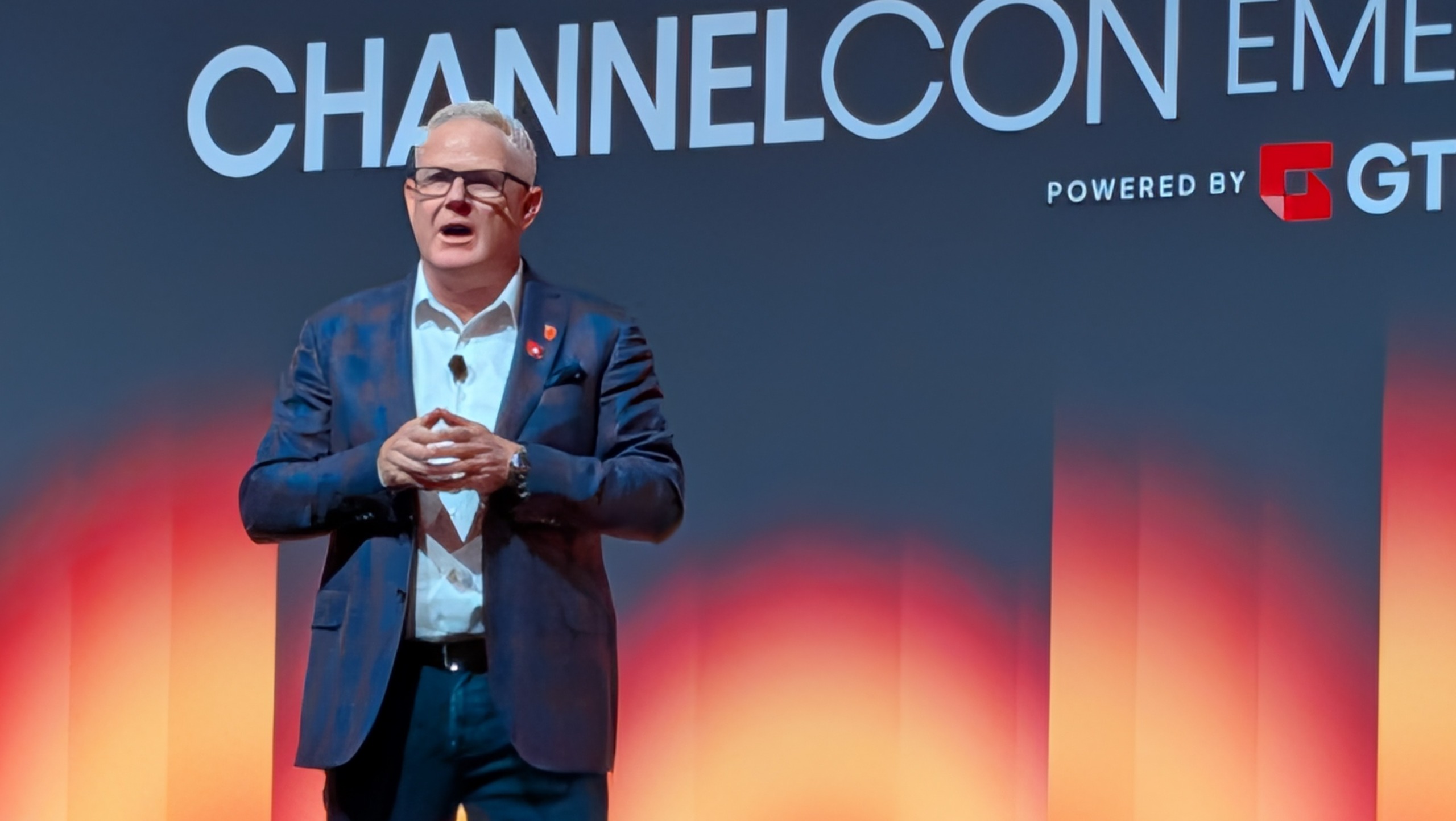
Speaking at GTIA ChannelCon EMEA earlier this month, Rod Baptie, founder of Baptie & Company and a veteran channel exec, warned that the economics underpinning software subscriptions were changing fundamentally.
“The commercial model’s moving. We started with a licence. We moved to subscription. That gave you access. Now the vendors want to move to consumption. The client wants to move to the outcome,” he said.
So what does that mean for the MSPs responsible for deploying, integrating and managing their products?
Baptie argued that traditional software-as-a-service (SaaS) models worked because adding another user cost vendors relatively little. AI changes that because higher usage drives up computing costs. Autonomous agents could amplify those costs further, potentially leaving customers facing unexpectedly large bills.
Vendors want pricing that reflects consumption, while customers want predictable expenditure and evidence of a return on investment.
Baptie argued that customers were reluctant to pay for AI tokens without knowing what value they would receive.
ChannelPro Newsletter
Stay up to date with the latest Channel industry news and analysis with our twice-weekly newsletter
“It's a blank cheque. It’s hard to budget,” he said.
He identified four potential commercial approaches: consumption-based pricing, capped consumption, charging for individual actions or workflows, and outcome-based pricing. However, he believes hybrid models combining a base service fee, usage allowances and potentially performance-related payments are the most likely way forward.
A channel still finding its feet
However, figures presented by GTIA suggest the industry has some way to go before it can consistently monetise AI. According to the association, 97 percent of MSPs globally report using AI internally, but only 20 percent have established meaningful governance around it, while 25 percent have developed a formal revenue-generating strategy.
Carolyn April, GTIA’s VP of research and market intelligence, said the gap between adoption and maturity was becoming increasingly important.
“Maturity with AI is the new differentiator. It’s not whether you do it; it’s how you do it, and how well you do it,” she said.
April also questioned whether traditional managed services pricing would remain viable as automation changed how providers delivered services. She predicted that traditional per-user and per-device pricing would gradually lose ground as MSPs explored consumption-based and outcome-based models.
GTIA’s research found that many channel businesses remain commercially diversified. Some 45 percent combine product sales, projects and recurring revenue, while only around four in 10 identify as purely managed services businesses.
April suggested that this flexibility could prove advantageous as providers experiment with AI consulting, implementation and ongoing management.
“Right now, we don’t know what the predominant business model is going to be for AI,” she said.
The MSP pricing paradox
Ian Groves, managing director of UK MSP Start Tech, also sees a challenge in the relationship between AI-driven efficiency and traditional per-user contracts.
“Our unit of currency in the MSP world is we almost all charge per-person per-month,” he said. “And then in the next breath, we say ‘we can make your business more efficient with AI, and you won’t need as many people’, without realising the contradictory irony to our own business.”
Groves believes providers need to focus less on selling AI products and more on identifying where technology can improve customers’ operations.
“Businesses can make money from AI, but not if they go out trying to sell AI,” he said.
But outcome-based pricing brings complications of its own. Baptie warned that providers could struggle to demonstrate which supplier was responsible for a particular result, especially where multiple technologies and partners were involved.
Customer behavior could also affect whether a project achieved its objectives, leaving an MSP at risk of not being paid for factors beyond its control.
“Outcome pricing is the customer ideal. It’s, however, very, very difficult to get to,” he said.
Protecting margins and cash flow
Baptie also warned MSPs against overlooking the financial consequences of changing commercial models. Providers may need to invest in specialist employees, integration work, governance and customer training before receiving payment.
At the same time, variable AI consumption costs could erode margins if contracts don’t adequately account for usage increases.
He advocated implementation fees, milestone payments, clear usage limits and contracts that distinguish between guaranteed services and performance-related rewards. The objective should be to protect cash flow while ensuring that MSPs are compensated for their contribution throughout the customer relationship.
Providers also need to consider the risk of vendor pricing changes, runaway AI agents, and expanding support requirements.
“Know your economics before quoting,” said Baptie, who believes the strongest opportunities will go to MSPs combining technical expertise with detailed knowledge of particular industries.
Building a new playbook
GTIA CEO Dan Wensley acknowledged that MSPs could be overestimating how quickly customers would pay for managed AI services. However, he said the transition differed from the industry’s earlier move towards recurring managed services because customer demand was already established.
“The SMB customers are asking for AI. In fact, they are deploying AI,” he said.
In some cases, customers are introducing AI faster than their MSPs can develop the expertise to manage it.
GTIA’s newly launched Managed Intelligence Alliance aims to help providers navigate that transition through shared research, practical guidance, and commercial models. Wensley said the alliance would develop resources including case studies and go-to-market pricing approaches that could be shared with members.
The need for that guidance is becoming more pressing as MSPs balance customer expectations against the costs of delivering AI services. For providers, the opportunity extends beyond reselling AI licences or charging for consumption. Consulting, integration, security, governance, and ongoing optimisation all offer potential sources of revenue.
But the challenge is to translate those activities into contracts that customers understand, that reward measurable improvements and that protect the MSP’s profitability.
Christine has been a tech journalist for over 20 years, 10 of which she spent exclusively covering the IT Channel. From 2006-2009 she worked as the editor of Channel Business, before moving on to ChannelPro where she was editor and, latterly, senior editor.
Since 2016, she has been a freelance writer, editor, and copywriter and continues to cover the channel in addition to broader IT themes. Additionally, she provides media training explaining what the channel is and why it’s important to businesses.


 Why AI governance could prove to be a big opportunity for channel partners
 CISA’s CVE program shake-up: What does it mean for businesses


 Who qualifies to be an MSP? GTIA wants to set the standard
 AI is rewriting the rules for MSPs in cybersecurity
 AI agents are gaining employee-level access. How partners can stop over-privileged automation
 From discovery to orchestration - how AI is reshaping the channel marketplace
 How channel partners can help customers overcome innovation paralysis
 Overe targets MSP and SMB security gains with former Sophos CSO appointment
 When your customer falls under NIS2, so do you
 How MSPs can scale profitability and stand out in 2027


