“Unprecedented. I’ve never seen anything like it in my entire IT career.”
That’s how Ian Thompson, senior vice president of business delivery at Managed Service Provider (MSP) Assured Data Protection, sums up the current state of server pricing.
“Prices are incredibly volatile and only going upwards, while availability is also unpredictable,” he said.
“Quotes that used to be valid for weeks are now valid for days, and sometimes even hours…it’s definitely far more chaotic than normal market fluctuation.”
Latest Videos FromChannelPro
Across the channel, partners are grappling with a perfect storm of memory shortages, AI-driven demand, and dynamic pricing models that are upending how infrastructure deals are usually priced, quoted, and delivered.
While pricing cycles are nothing new in IT, many in the channel believe this time is different. Rene Klein, executive vice president for Europe at distributor Westcon-Comstor, said volatility is no longer a temporary disruption – it’s becoming embedded in how the market operates.
“What we’re seeing goes beyond the usual market cycles. Price volatility looks set to become a structural feature of the market… fundamentally changing how the channel operates,” he said.
At the heart of the issue is price uncertainty, he added.
“Quotes no longer represent certainty in the way they once did. Partners have to think earlier about deal structure, timing, and commercial exposure.”
Dynamic pricing reshapes the deal cycle
A major contributor to that uncertainty is the rise of dynamic pricing, where hardware costs can change right up to the point of shipment. Vendors, including Cisco and HPE, have already updated partner terms to allow price adjustments between quote and delivery. Indeed, HPE has explicitly reserved the right to reprice orders up to the day of shipment and shortening quote validity windows to as little as two weeks.
For partners, that creates a real challenge: how do you quote a deal when the underlying cost base is moving?
Chris Gilmore, CTO at Axians UK, says the result is a shift in how resellers approach commercial risk.
“Resellers are increasingly backing their own quotes off to vendor terms, rather than absorbing risk themselves. That means shorter quote validity, explicit pass-through pricing, and tighter alignment to vendor conditions,” he explained.
The traditional model, where partners could confidently quote weeks in advance, is quickly disappearing.
“The net effect is a more cautious commercial model replacing the stability we’d historically expect,” said Gilmore.
Margins under pressure
That shift is putting margins under strain, particularly for partners reliant on hardware resale.
“Margin pressure is a real challenge when pricing changes after a customer quote has been issued. We increasingly see partners exposed to repricing late in the process,” said Klein.
Analyst data suggests this pressure is unlikely to ease soon. Omdia has warned that ongoing memory shortages are squeezing margins across the supply chain and forcing vendors to pass on higher component costs.
Some partners are mitigating risk through planning. Thompson said his firm has taken the unusual step of ordering hardware up to 12 months in advance, compared with about one month historically.
“That agility gives us confidence we’ll be ahead of many organizations,” he explained.
Memory shortages at the core
Gilmore points out that the biggest driver of volatility is strong demand for DRAM and high-bandwidth memory as AI workloads consume global manufacturing capacity. That pressure is cascading across the stack.
“It flows into storage, especially SSDs, and into networking and security platforms that rely on the same supply chains,” he said.
Thompson agrees, describing memory and flash as the “major pinch points” affecting server builds.
“Memory is used in everything – smartphones, tablets, set-top boxes. Demand is huge.”
Analysts warn that continued AI-driven demand for DRAM, NAND, and high-bandwidth memory is outstripping supply, creating sustained pricing pressure across server and storage markets.
Customers caught off guard
For many end users, however, the scale of the disruption hasn’t fully landed.
“There’s still a lot of denial in the market. Customers assume they can order a server and have it delivered within a few weeks at a predictable price,” said Thompson. “When they discover the real lead times or fluctuating costs, it comes as a shock.”
That disconnect is making it harder for partners to advise customers and lock down project budgets.
“Customers still want predictable outcomes, but the market is delivering variable inputs. That’s why transparency matters more than ever,” said Klein.
The impact is already being felt more broadly. Omdia forecasts a 12% drop in global PC shipments in 2026 as rising memory and storage costs force vendors to prioritize higher-margin systems.
Adapting to a new reality
Faced with ongoing uncertainty, partners are being forced to adapt. Some are stockpiling equipment, others are broadening supplier options, or turning to refurbished hardware. But the bigger shift may be strategic.
“We’re continuing to move toward services-led models,” said Gilmore, who noted that managed services, lifecycle support, and automation are areas less exposed to hardware volatility.
Klein sees a similar trend at the market level, with early signs that customers are shifting away from hardware-heavy models toward software, cloud, and consumption-based approaches.
“Forward-thinking partners will focus on evolving their commercial models rather than waiting for stability to return,” he said.
No quick return to normal
If partners are hoping for a return to calmer conditions, they may be waiting some time. Omdia expects memory pricing to remain elevated through 2026 and into 2027, indicating that volatility is not a short-term spike but a longer-term shift.
“I don’t think we’ve even reached the peak of it yet,” said Thompson, predicting continued price increases through 2026 and potentially beyond.
Gilmore is slightly more measured, suggesting the market will eventually rebalance – but not quickly.
“This is demand-led, driven by global AI investment. The market will stabilize, just not immediately,” he said.
For now, however, the old rules no longer apply. In a market where prices can change overnight and quotes expire in hours, the ability to manage commercial volatility as much as technical risk is becoming one of the channel’s most valuable skills.


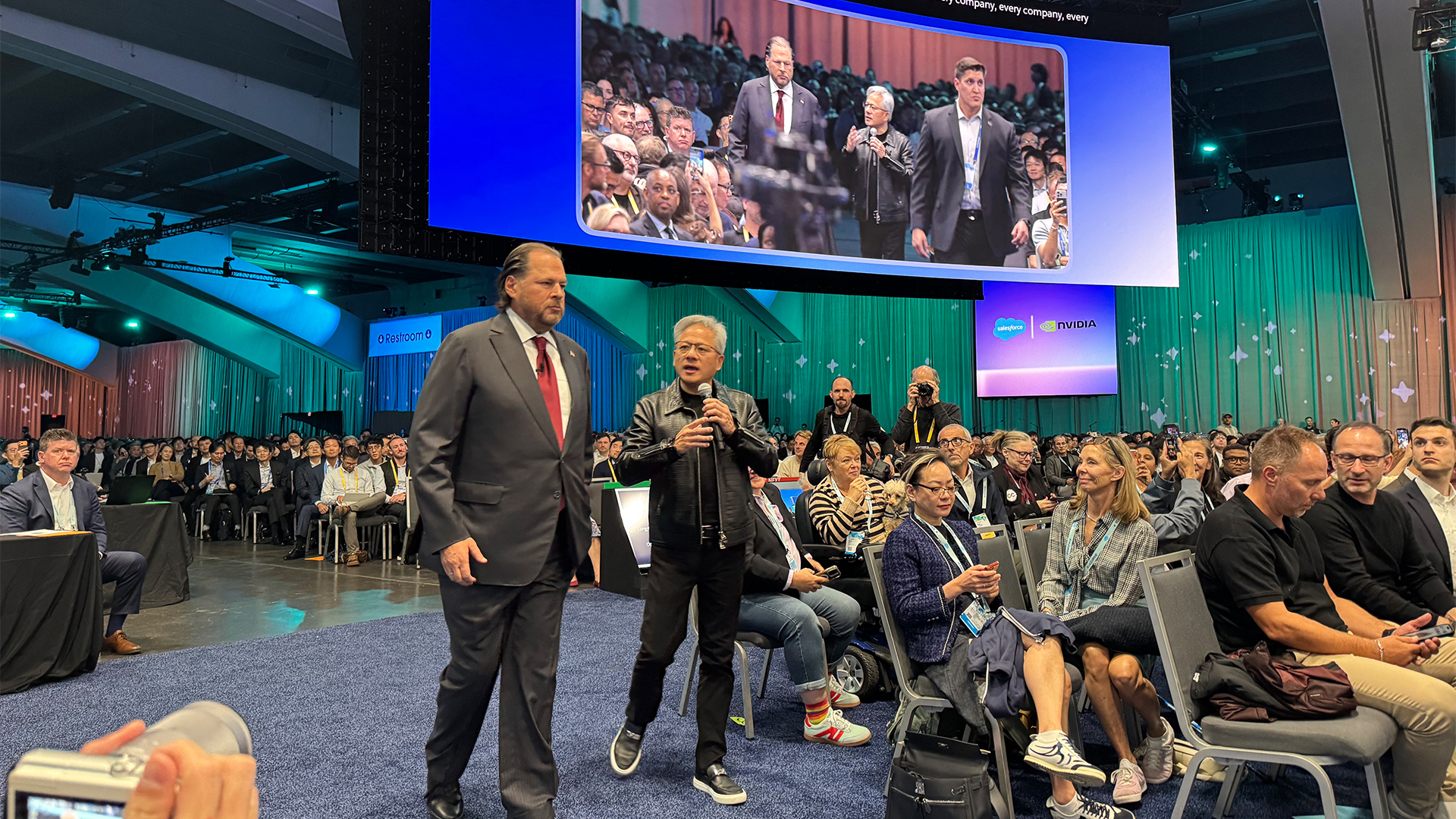 Marc Benioff and Jensen Huang aren’t sold on the ‘SaaSpocalypse’
 Dreamforce 2026 live: All the news, updates, and announcements from day one

 Achieving agility: Converting technology transformation into channel opportunities
 Unlocking data experience as the new revenue opportunity for channel partners
 Exclaimer eyes simplicity gains with new partner program
 Why resale alone can no longer carry the channel
 As global risks rise, businesses are looking to sovereignty for infrastructure control
 Why the next generation of MSPs will be built around infrastructure intelligence
 Dropzone AI expands EMEA channel reach with QBS Software distribution deal
 When flat-fee support stops working: How UK MSPs can turn observability into margin


